INT–δ: Painting to Poem
Instructor: Panagiotis MichalatosCollaborative Project (This project was developed through a fully collaborative two-person workflow. All conceptual and technical decisions were made jointly through continuous dialogue, iteration, and testing.)
Teammate: Jing Liao
Tools & Technologies: Mask R-CNN, CLIP, ArtEmis, custom texture classifier, Python + PyTorch, poem layout engine
Introduction
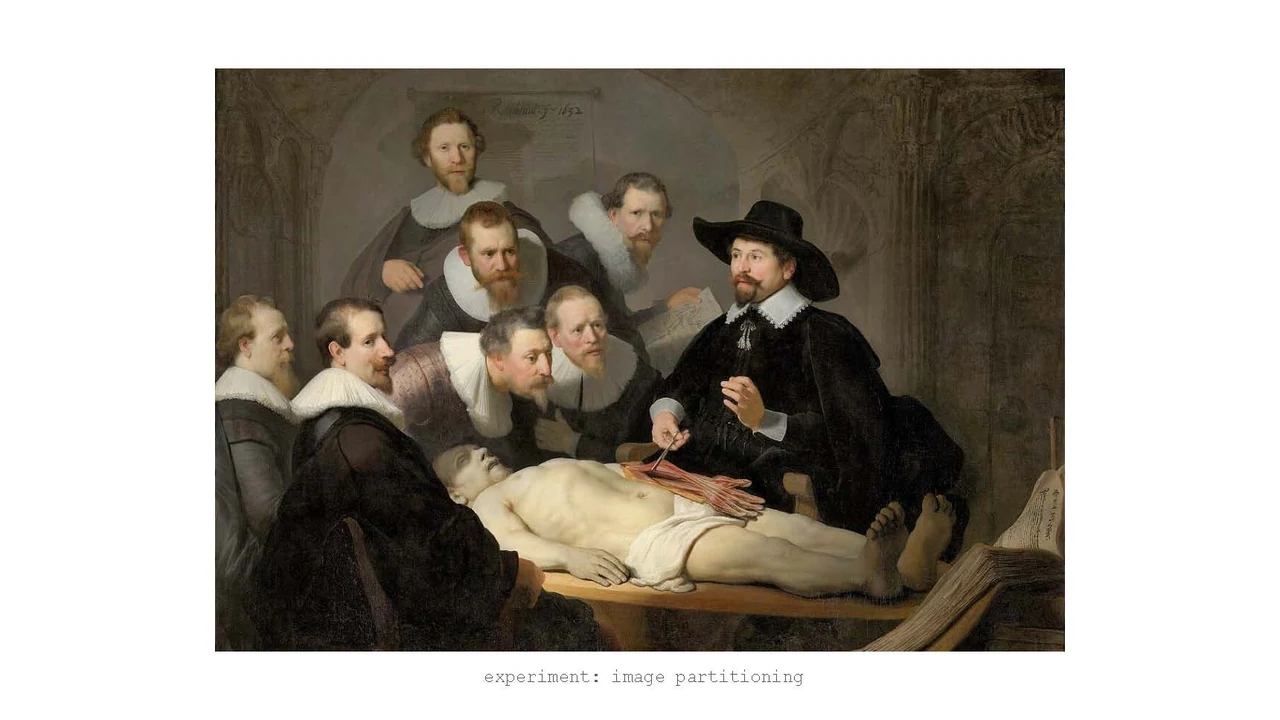
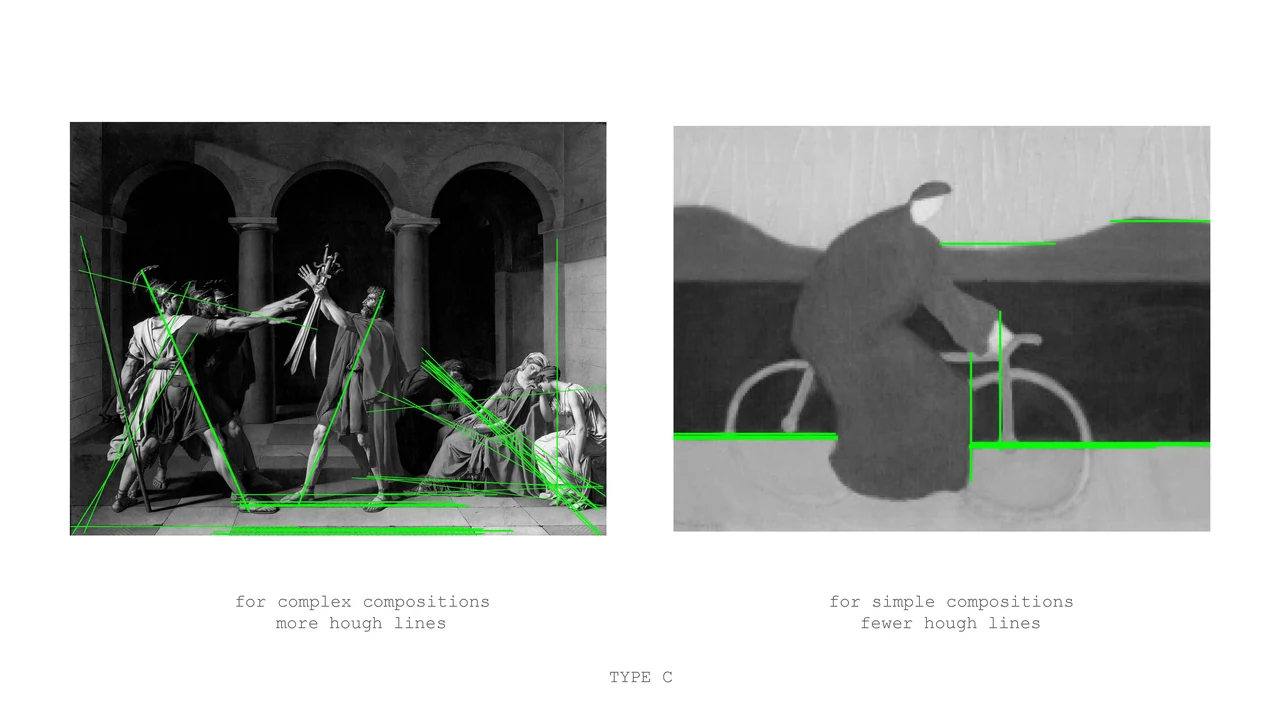
Painting to Poem is a computational system that transforms visual artworks into spatially structured poems. The pipeline analyzes a painting’s composition, emotion, and texture, translating these qualities into the arrangement of language.
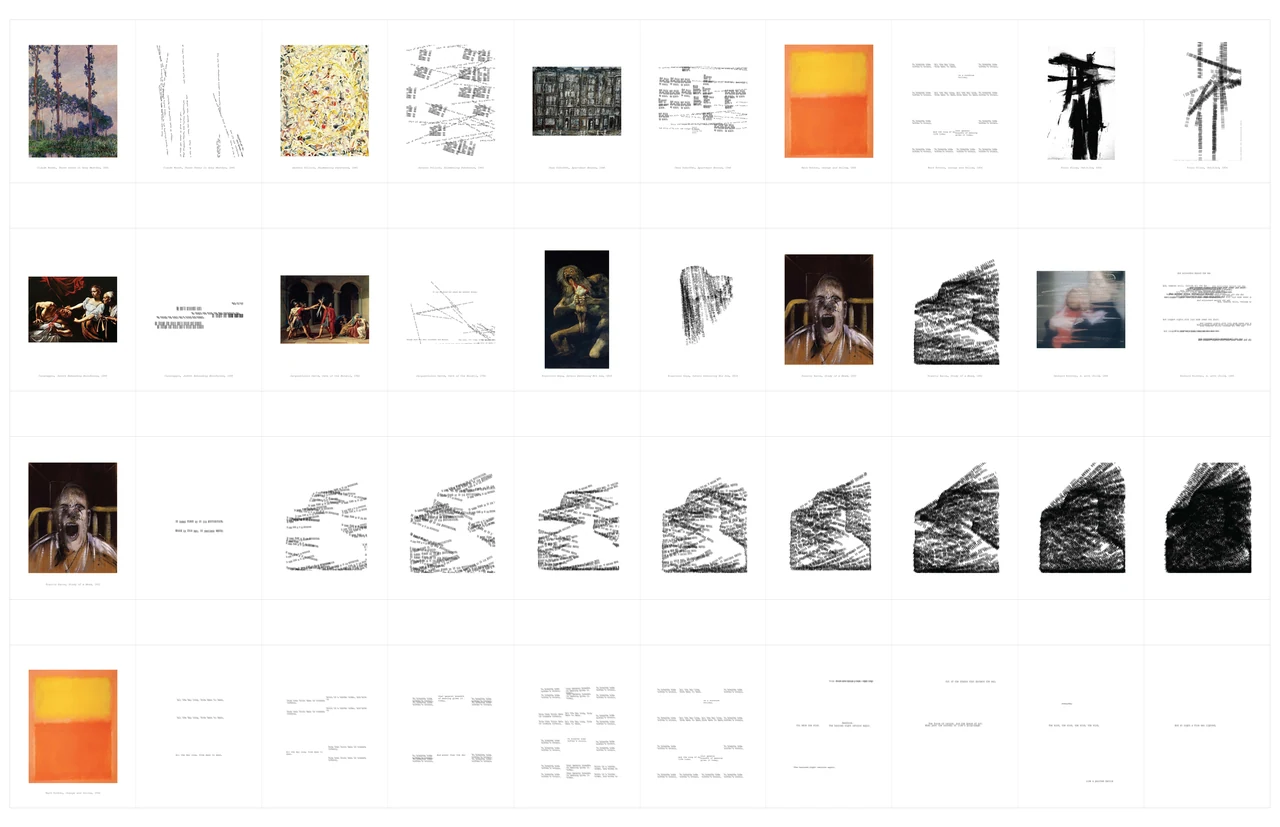
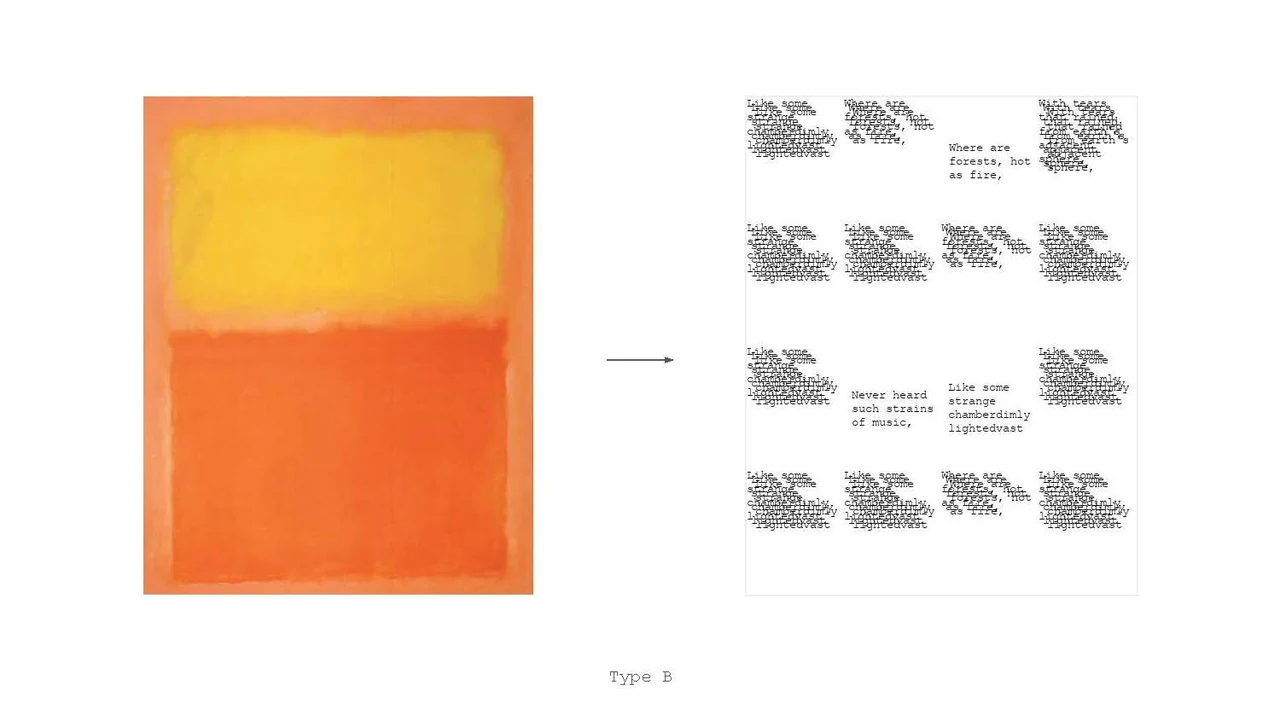
The system builds a multimodal bridge between image and text through several layers of computational analysis:
-
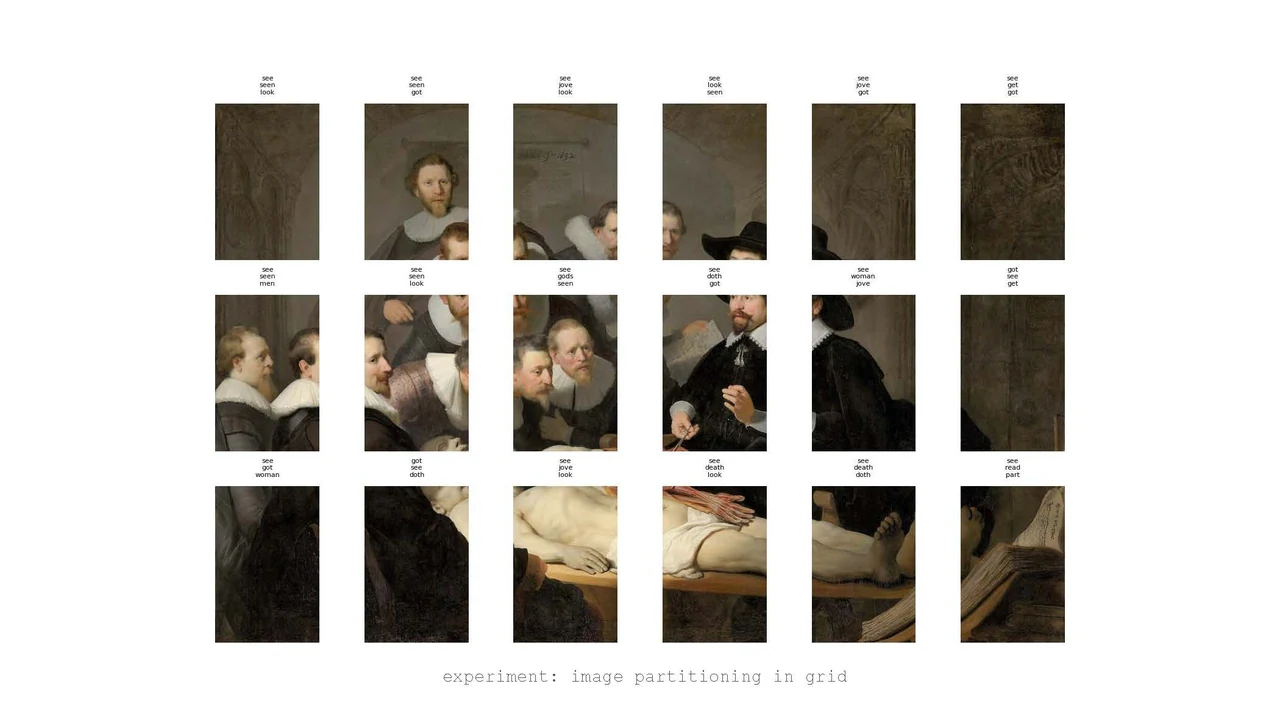
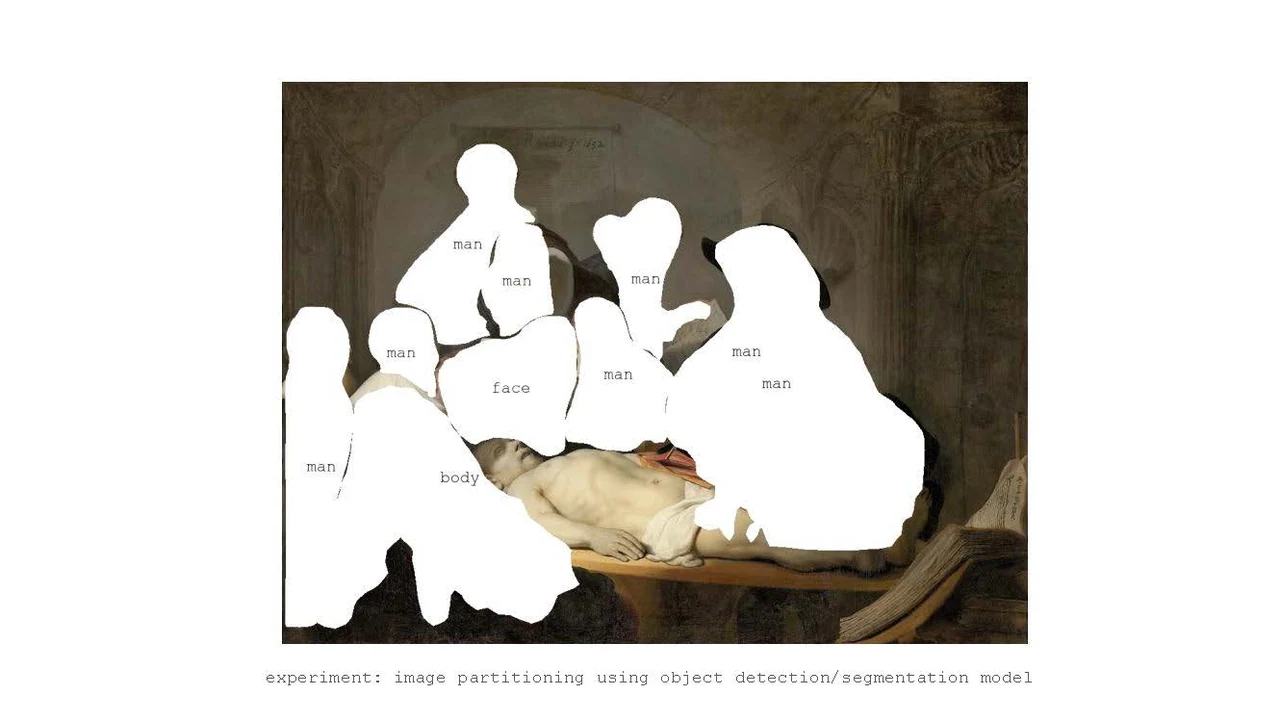
Segmentation & Form Extraction
-
Semantic Resonance
-
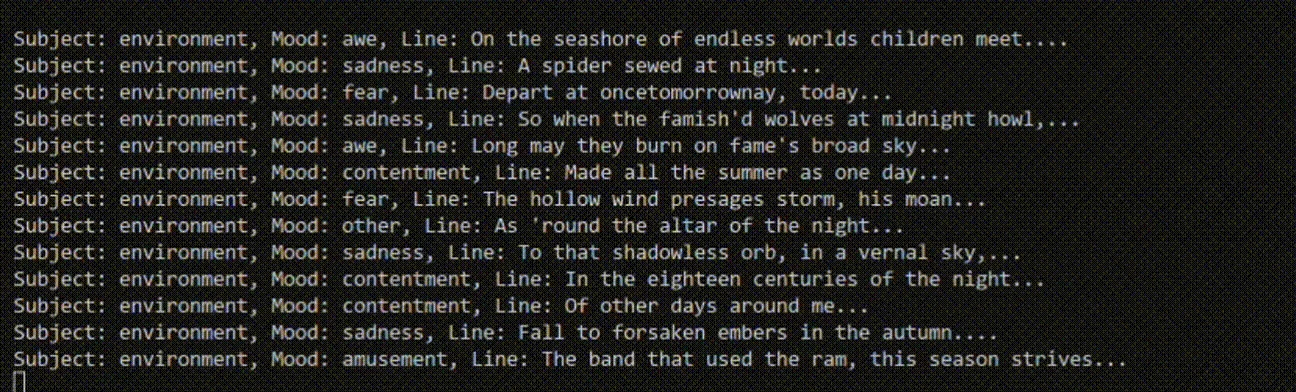
Affective Interpretation
-
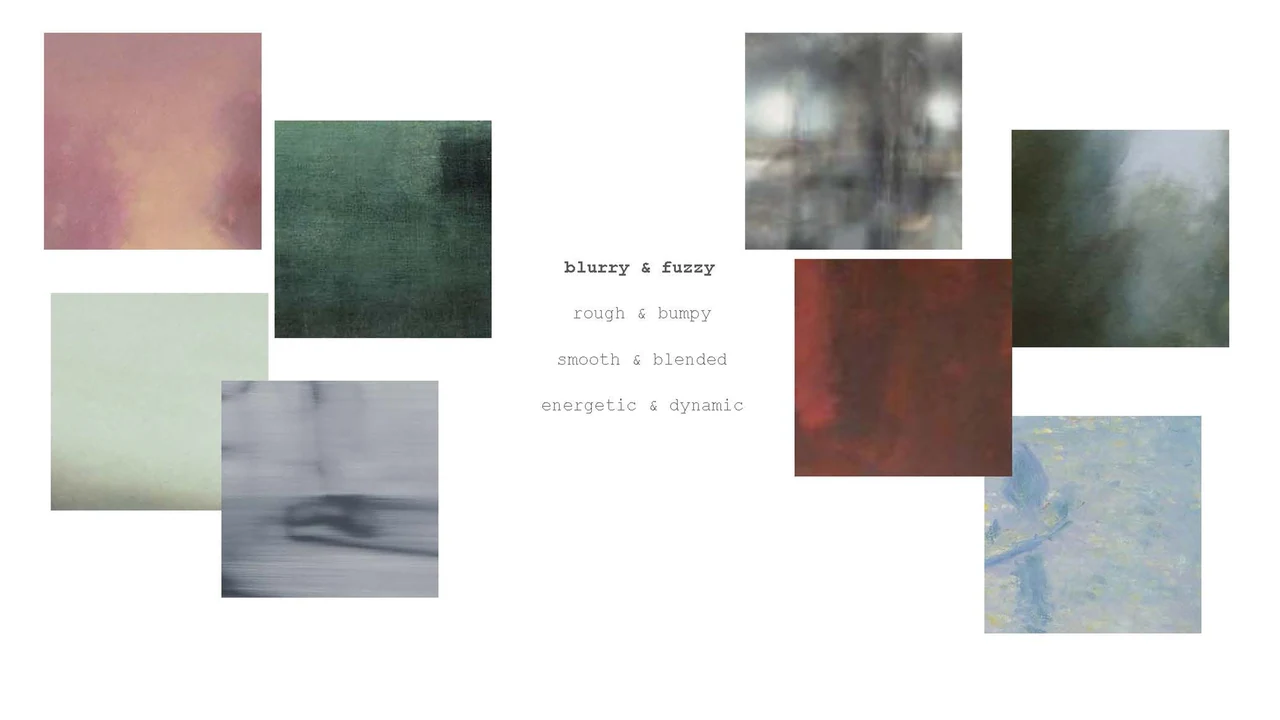
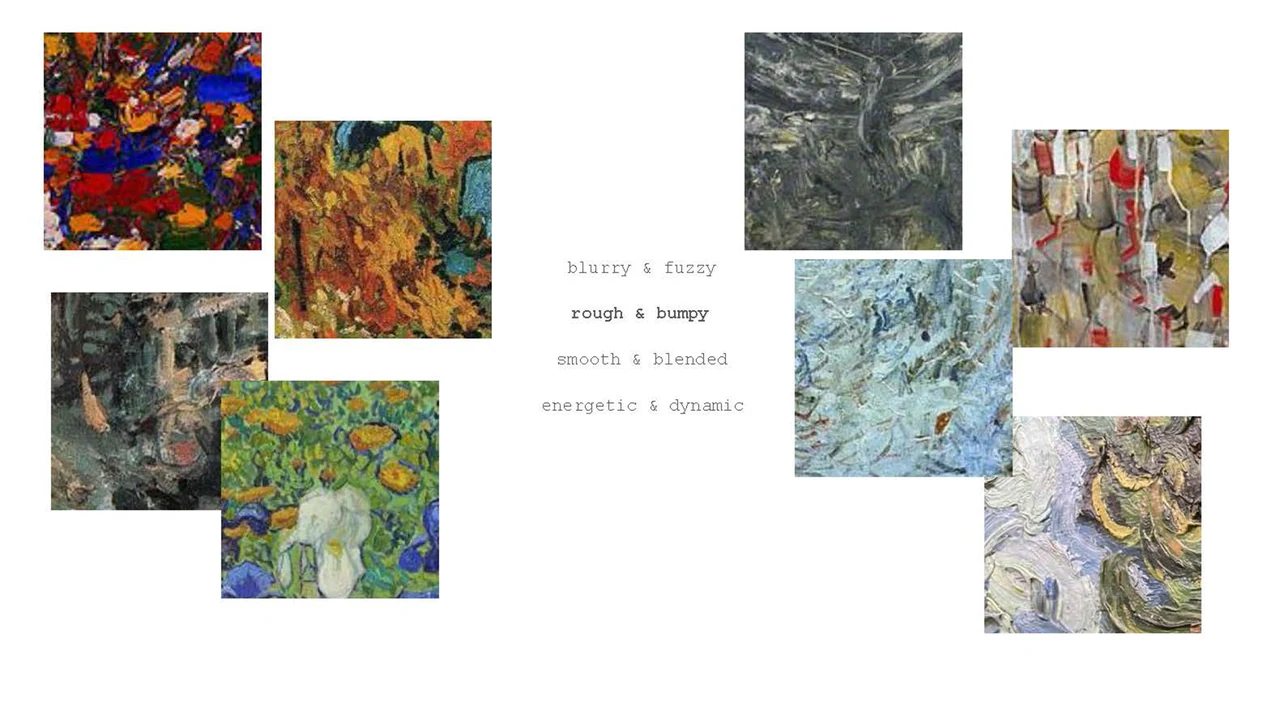
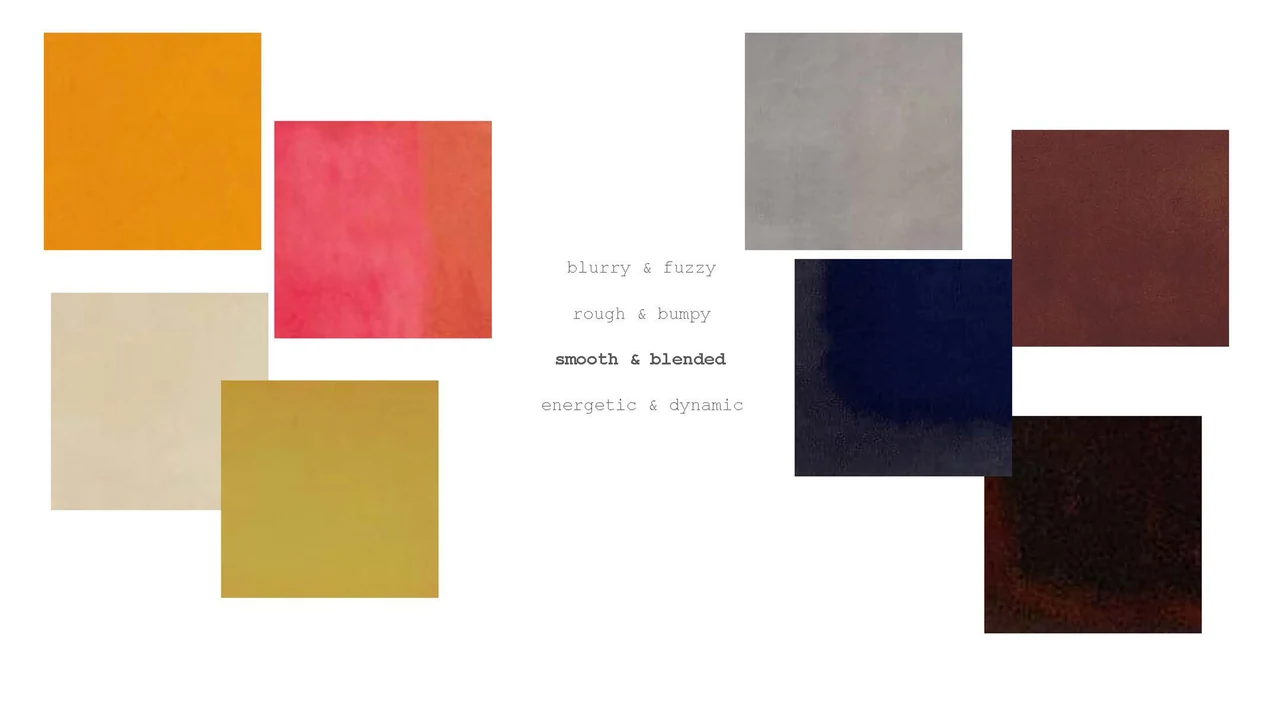
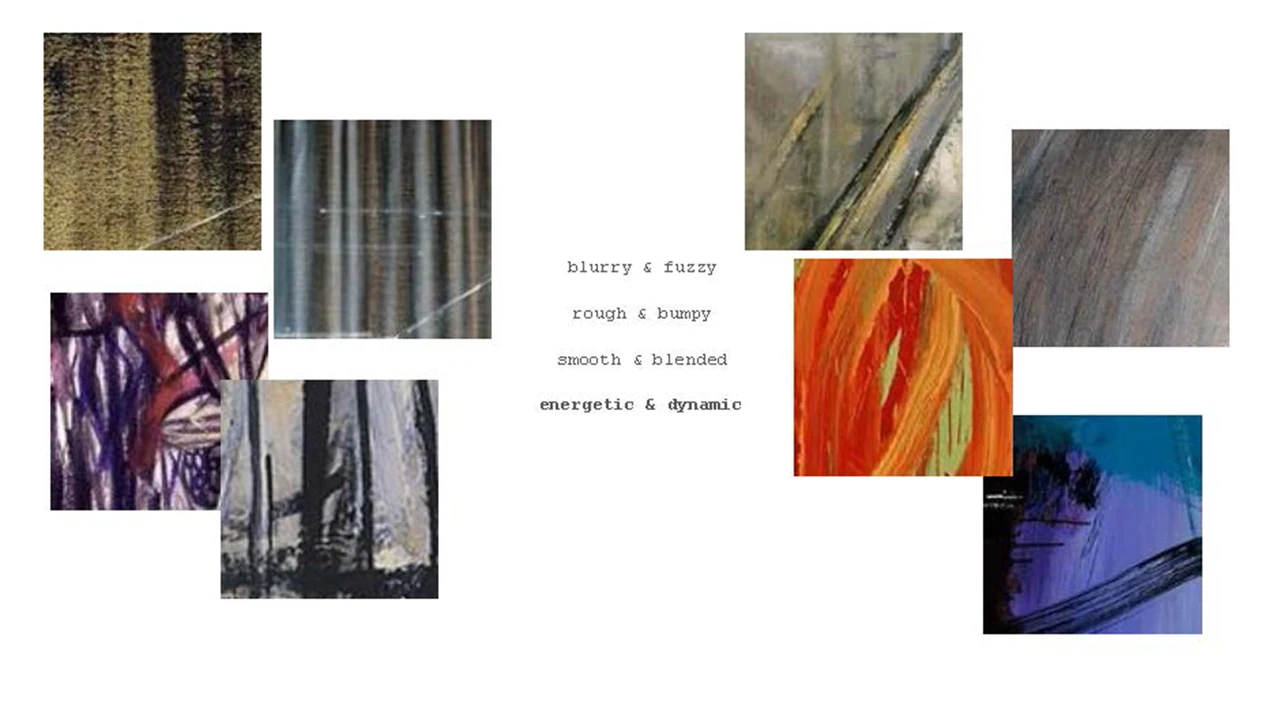
Texture Classification
Together, these layers enable the system to generate two poetic modes:
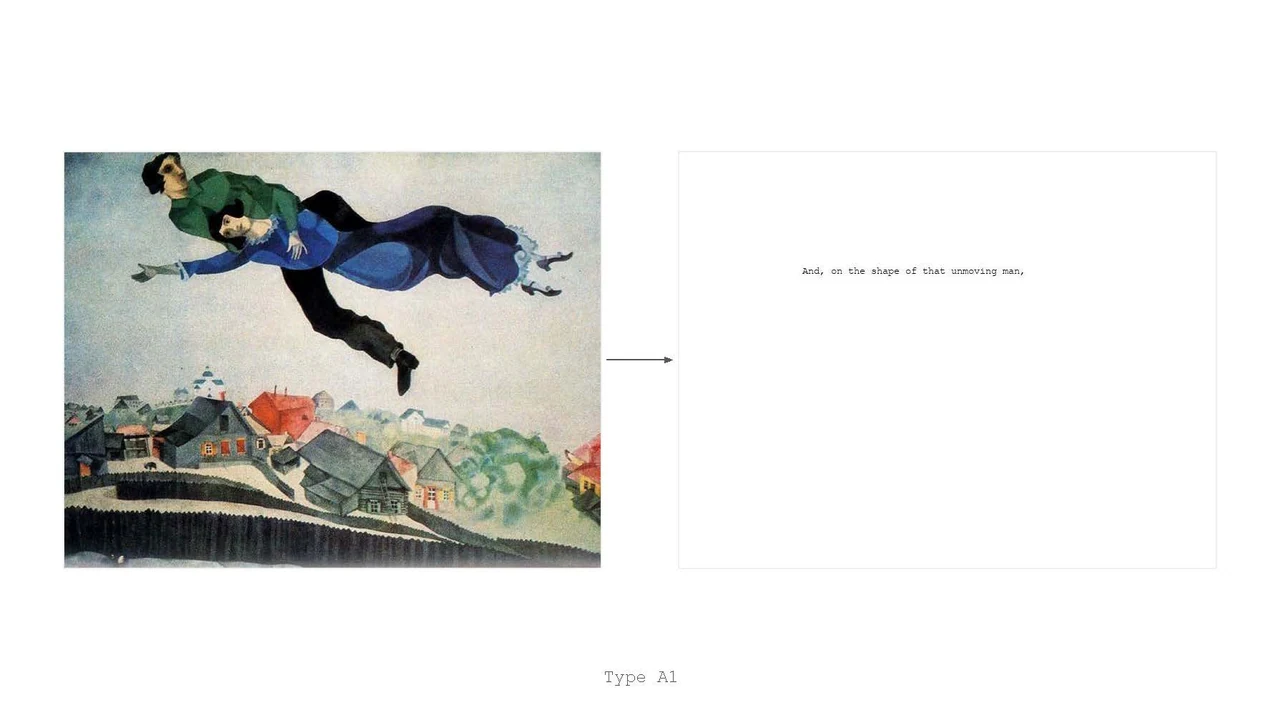
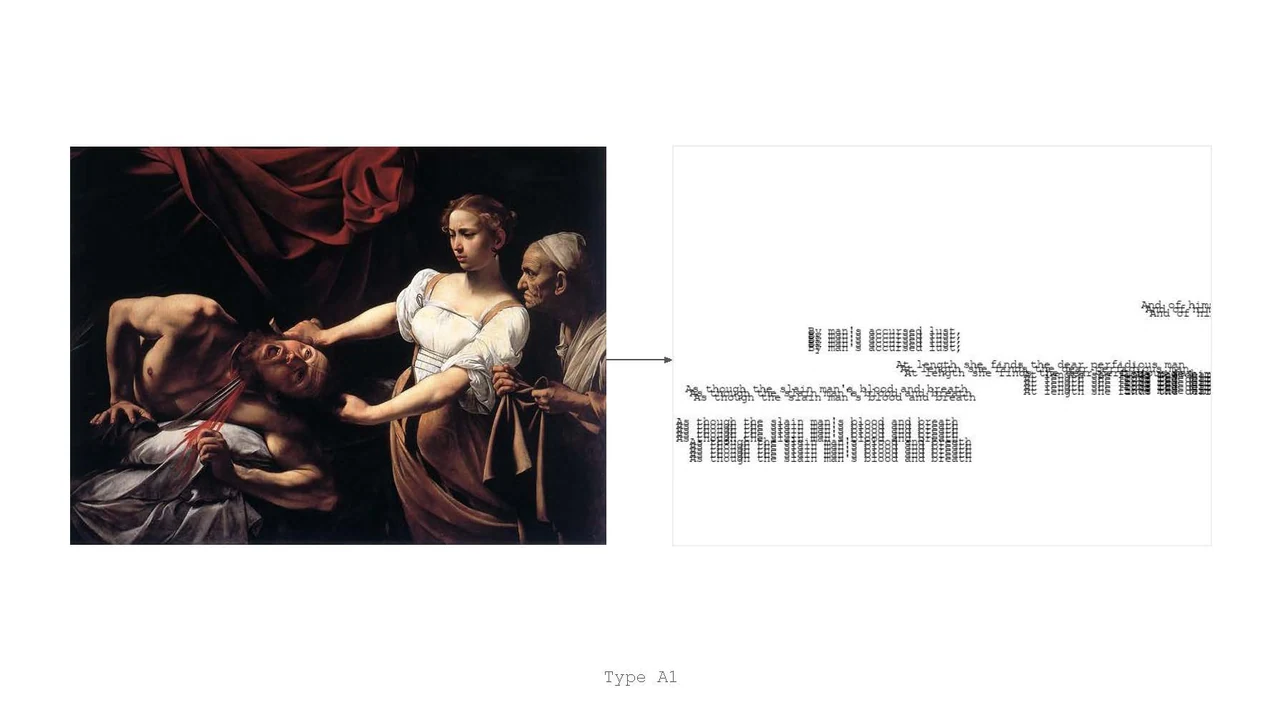
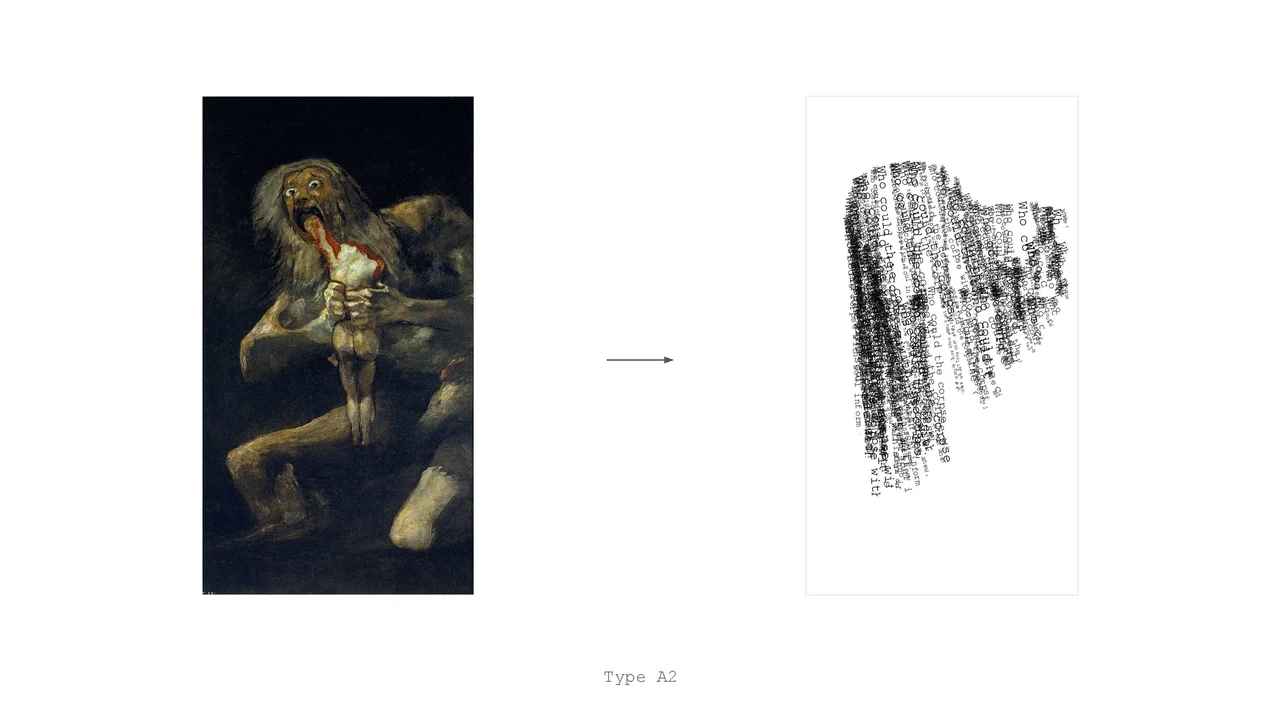
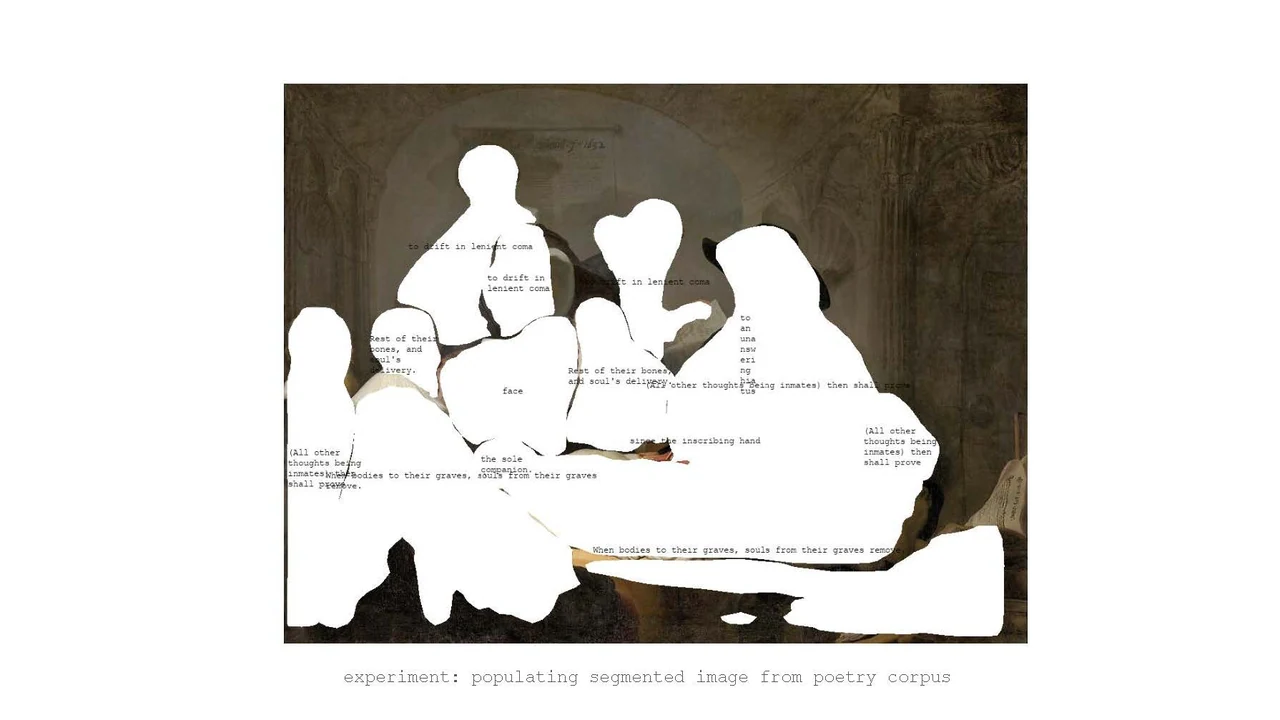
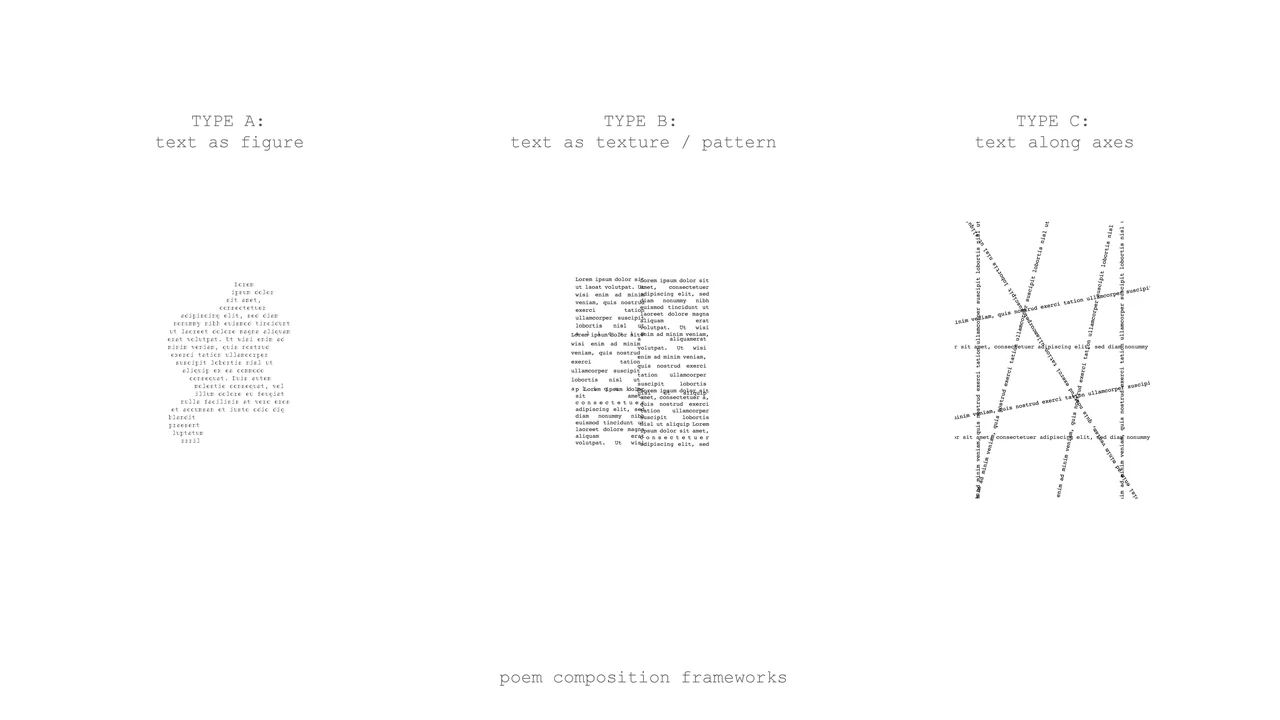
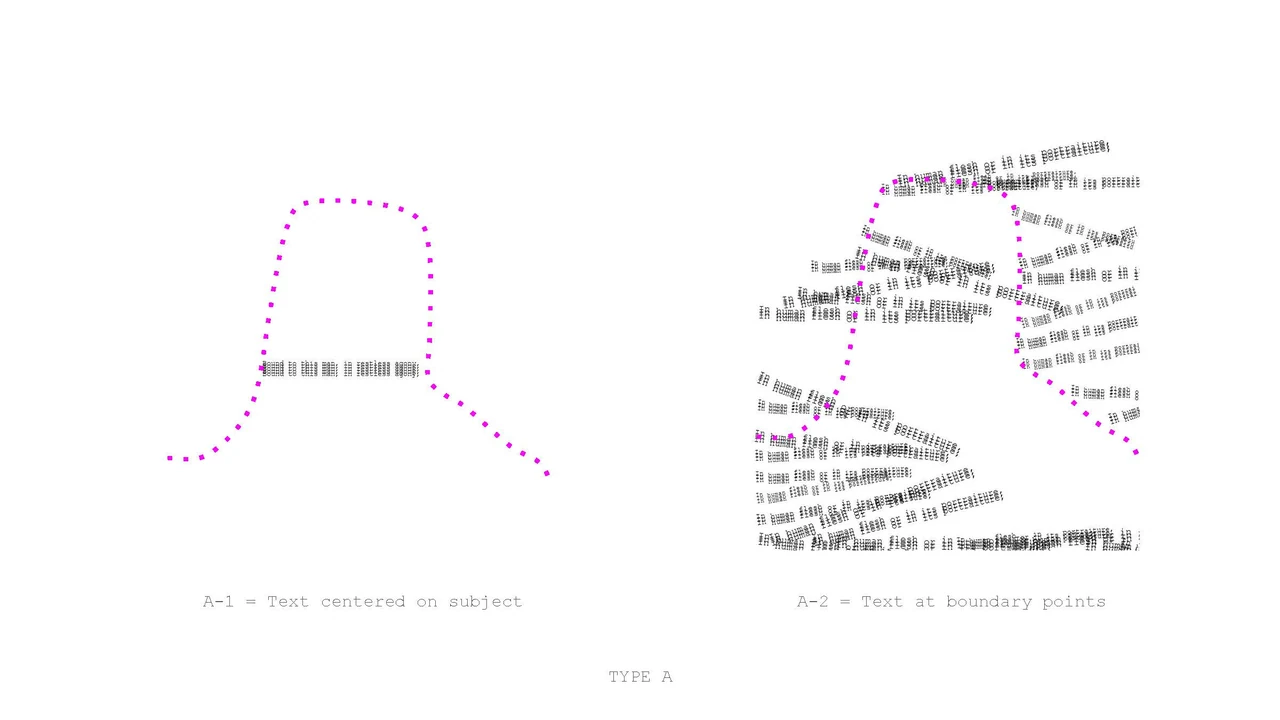
Type A, where text forms the silhouette of detected figures;
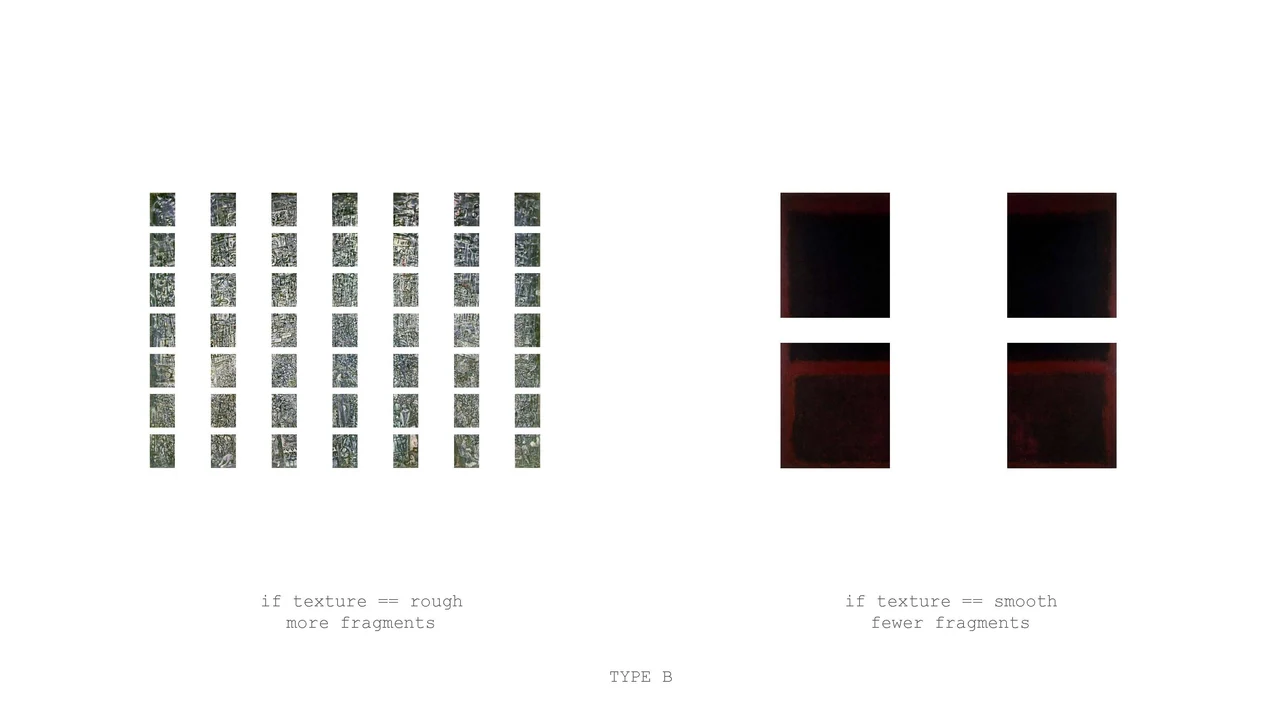
Type B, where text becomes a texture-like field embedded across the painting.
Poem Generation Modes
Type A — Text as Figure
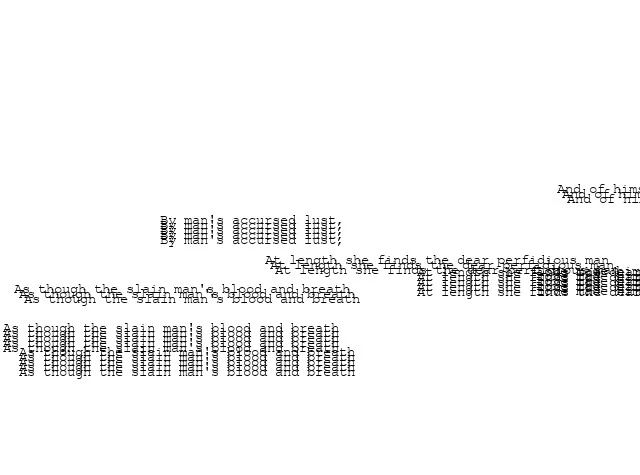
In Type A outputs, the poem follows the boundaries of segmented figures or objects. The text adopts the silhouettes extracted by Mask R-CNN, producing poem-shaped forms that echo the painting’s subjects. The poem becomes the figure.
Type B — Text as Texture
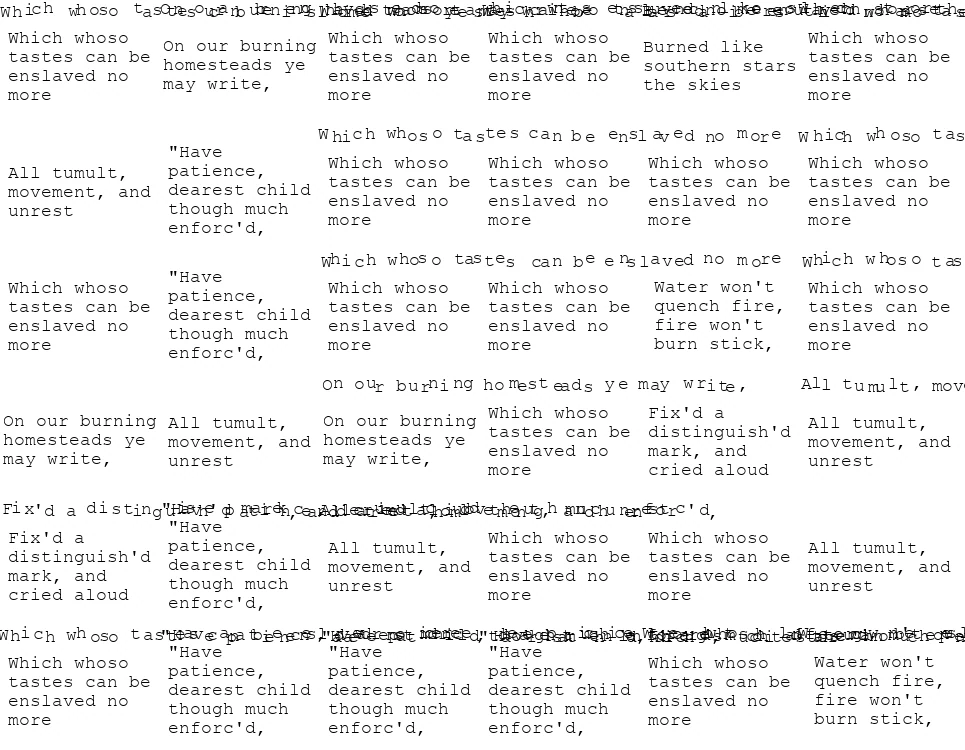
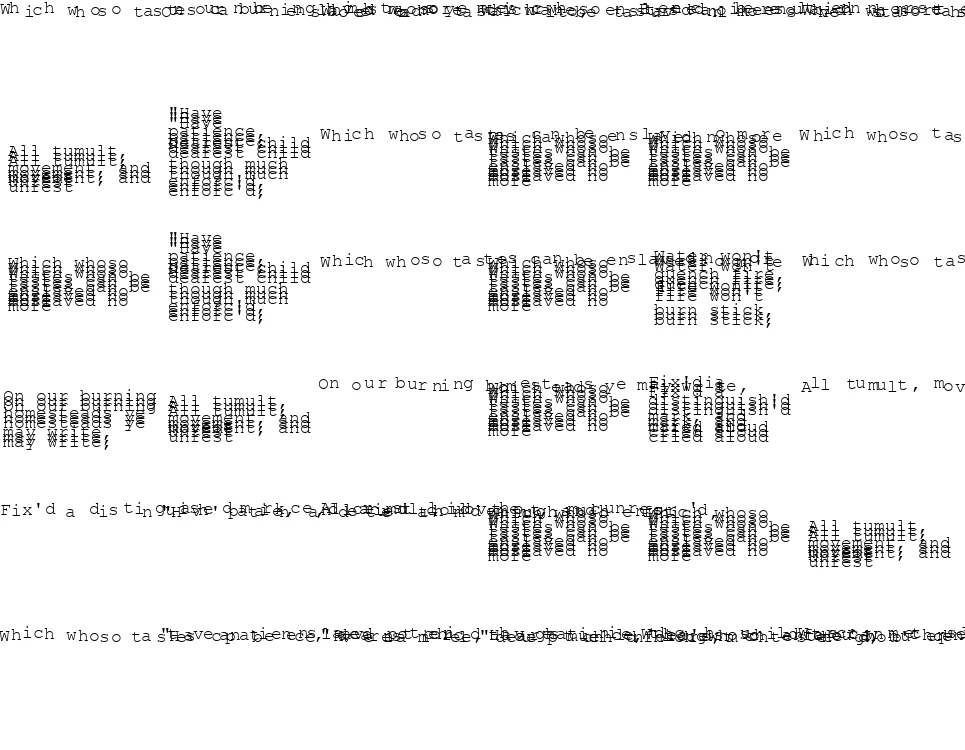
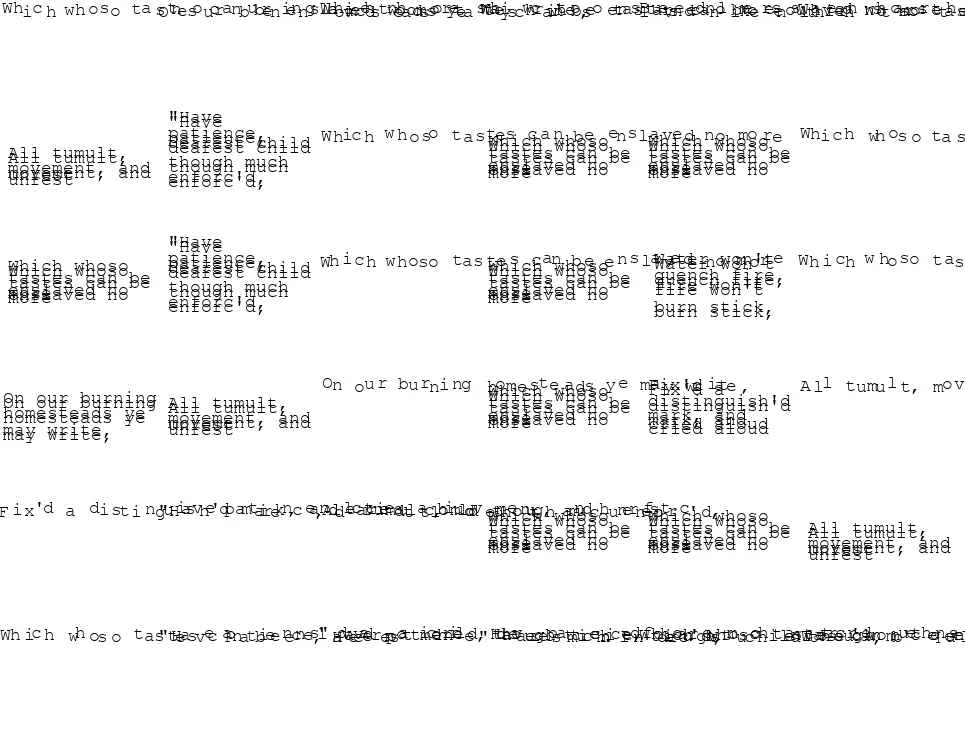
In Type B outputs, the poem behaves like a visual texture. Text fills regions of the painting according to their detected texture categories, generating rhythm, density, or repetition patterns that mirror the artwork’s surface qualities. The poem becomes the material.
These two modes allow the system to respond flexibly to different styles of paintings—figurative, abstract, textured, or atmospheric—producing distinct poetic interpretations.
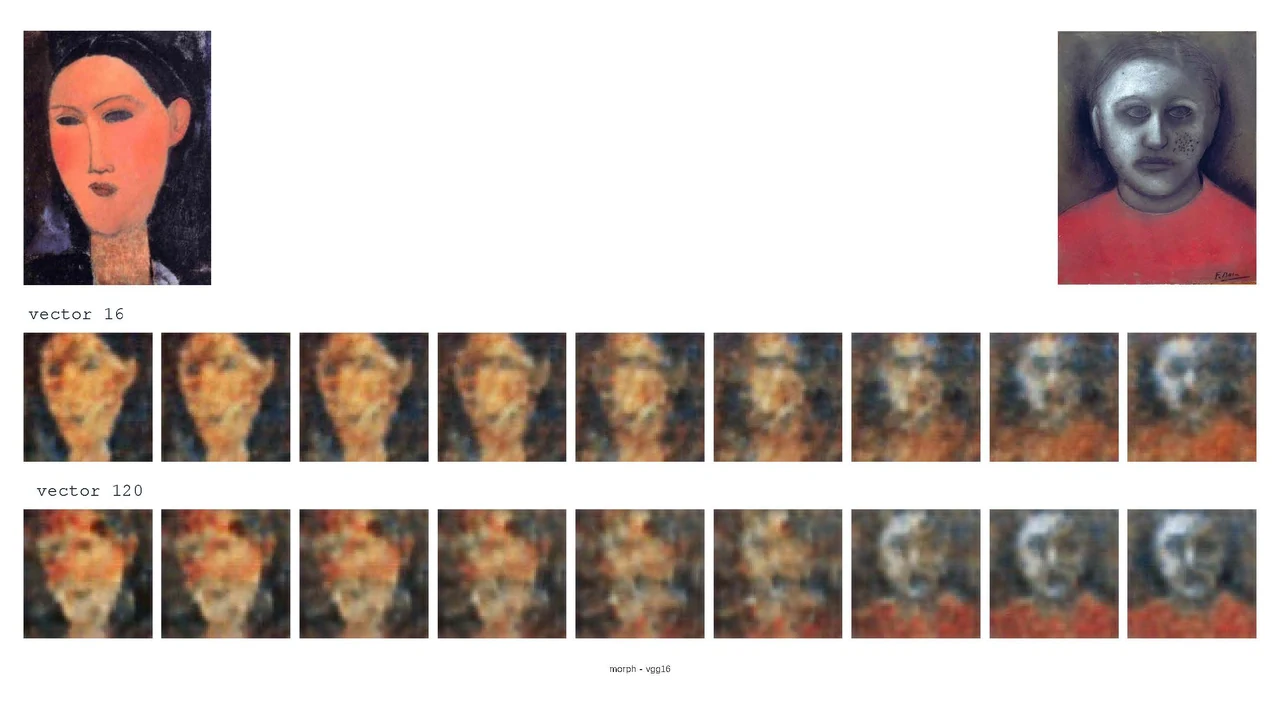
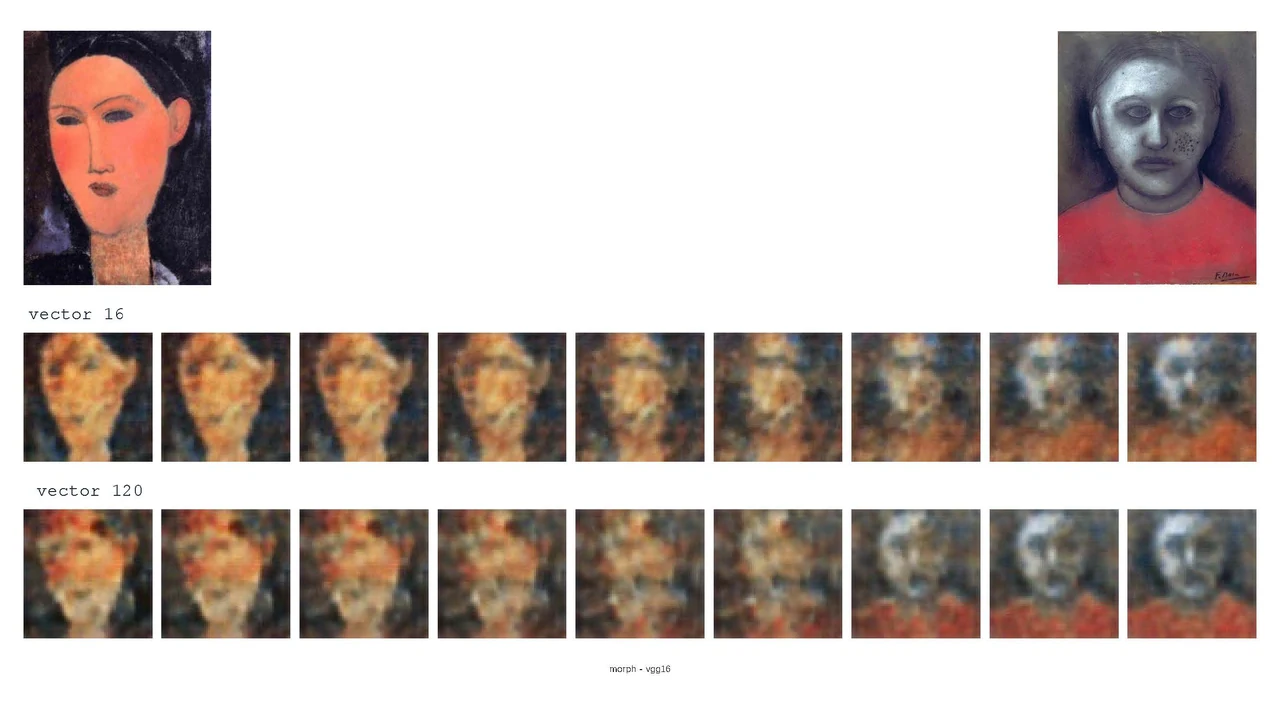
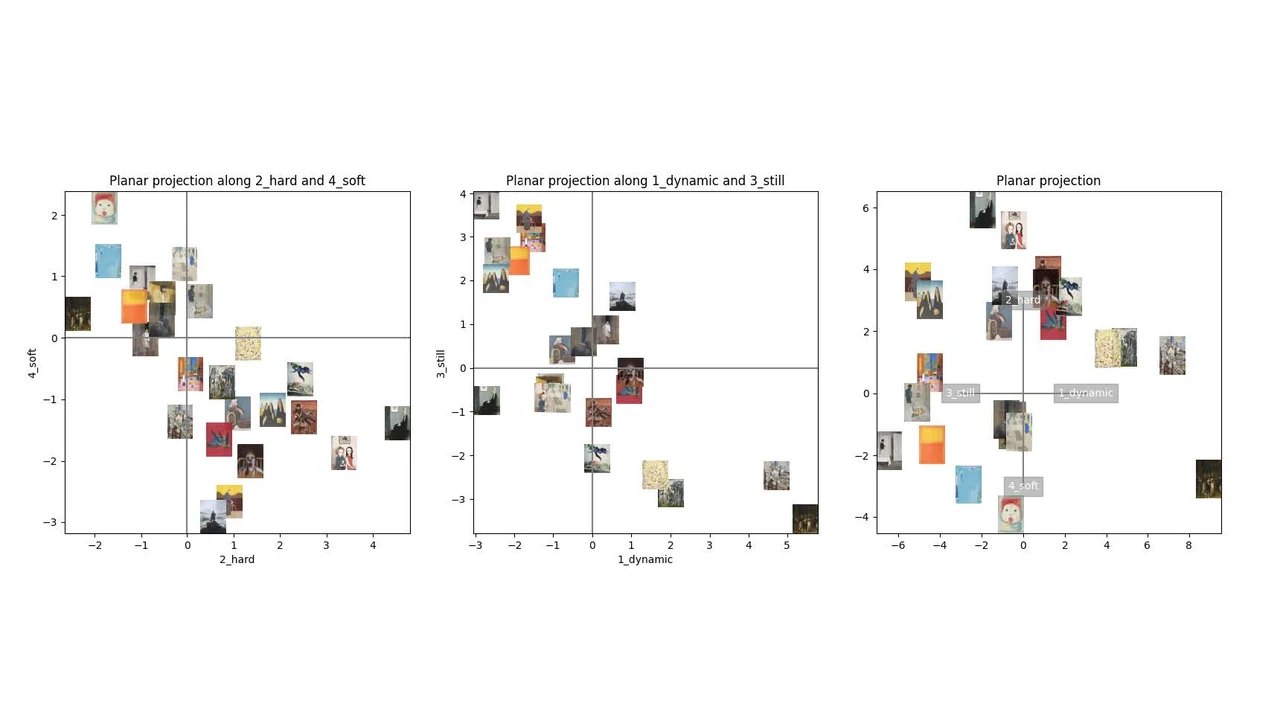
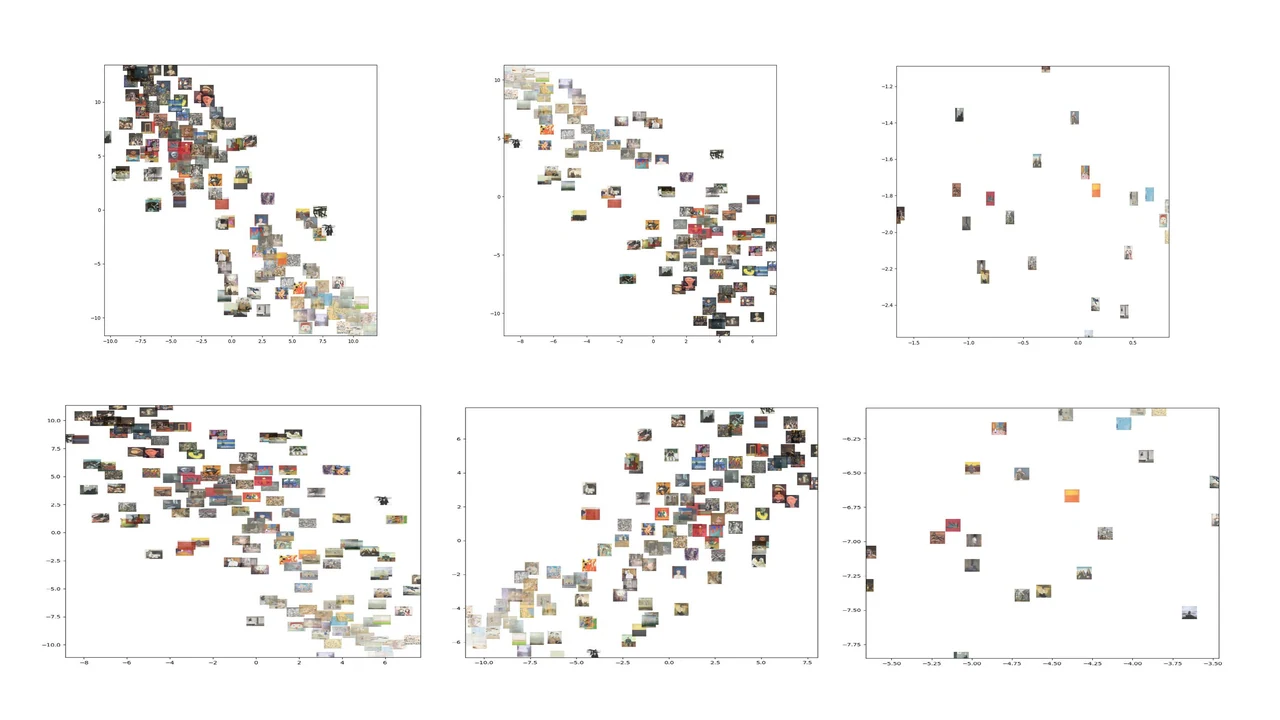
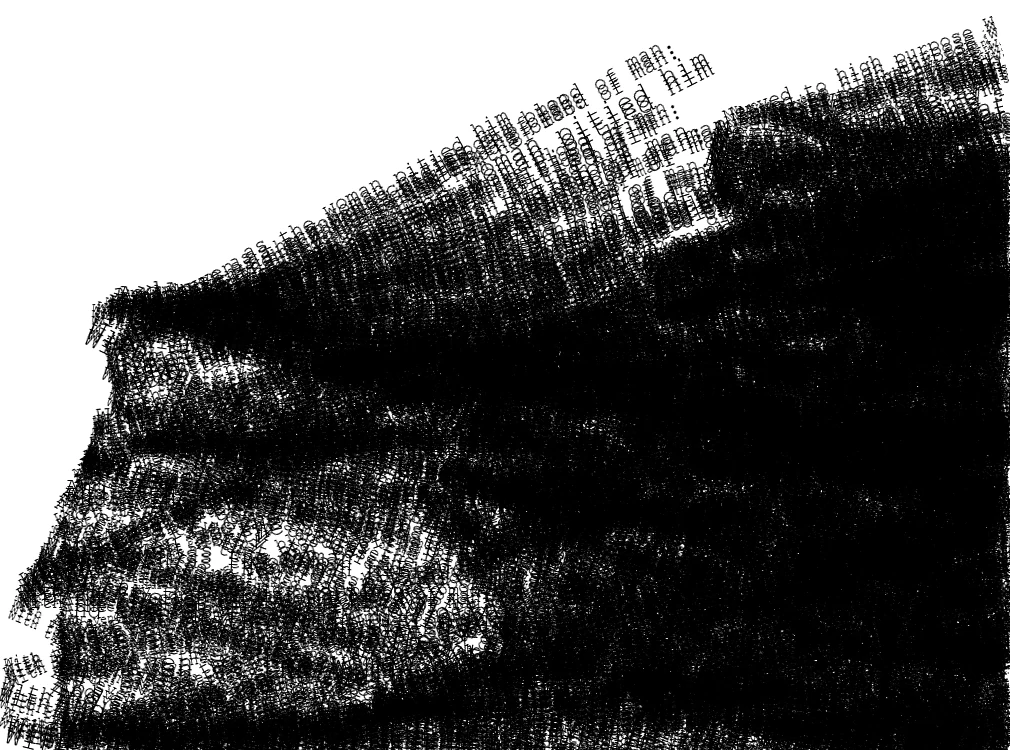
The system produces a wide range of visual poems shaped by the unique properties of each painting.
Because each artwork carries its own composition, emotional tone, and textural cues, the resulting poetic forms vary dramatically—from delicate contours to dense textual fields.
This gallery showcases the diversity and interpretive depth of the system’s outputs.
Reflection
Painting to Poem challenges conventional approaches to AI interpretation by shifting from description to poetic transformation. Instead of summarizing what a painting depicts, the system engages with how it feels, how it is structured, and how it behaves visually. The project positions poetry as a computational material shaped by vision models and text-generation engines.
This work reframes machine perception as a creative act—one that produces new expressive forms rather than objective analysis. By letting paintings generate poems through multimodal inference, the project invites viewers to encounter artworks through an alternative sensory and conceptual channel, expanding the possibilities of cross-modal human–AI collaboration.